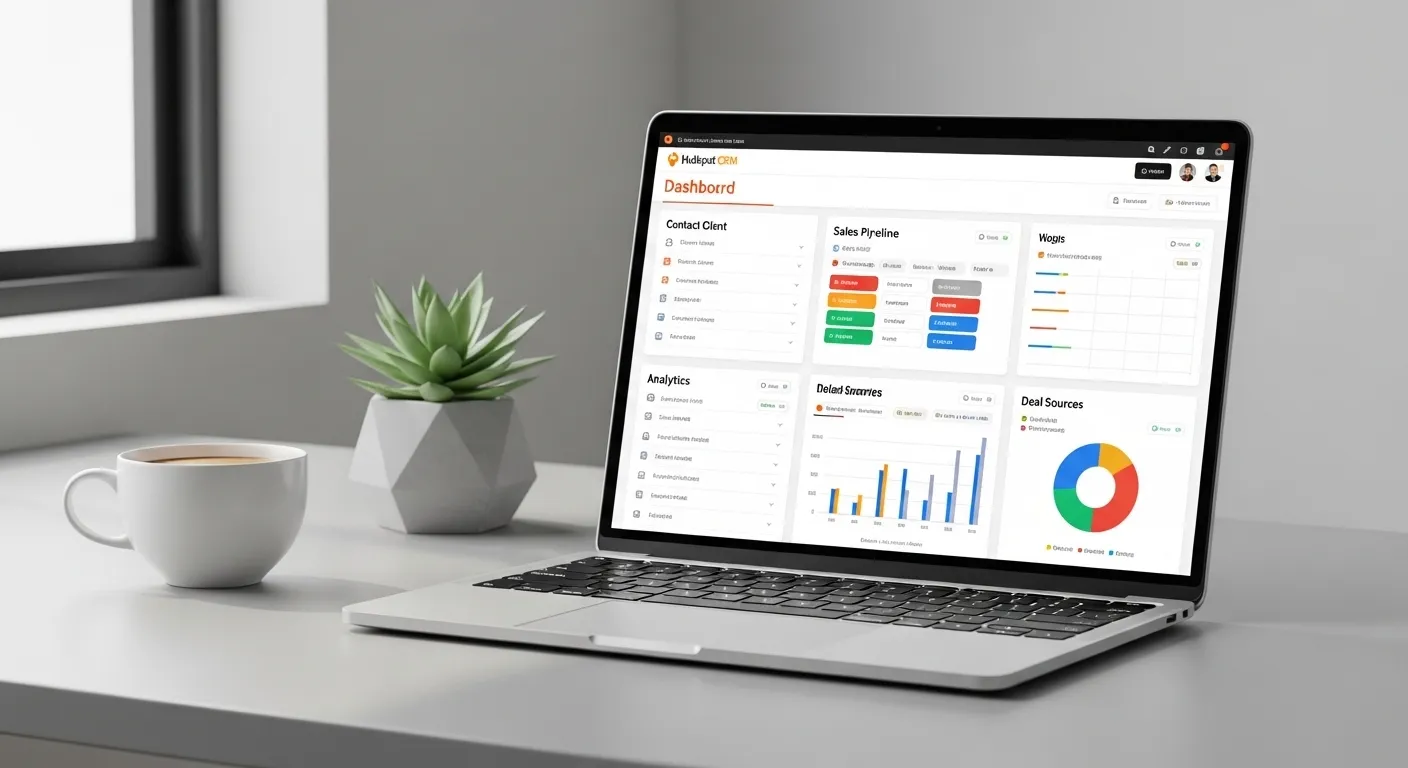
HubSpot CRM has transformed the customer relationship management industry by offering a genuinely free CRM platform packed with business-ready features. In 2026, HubSpot CRM continues to rank among the top CRM software solutions for businesses seeking a cost-effective and scalable CRM system.
With support for over 1 million contacts and unlimited users under its free plan, HubSpot CRM demonstrates that advanced sales automation and customer management tools don’t always require a large financial investment.
What is HubSpot CRM?
HubSpot CRM is a cloud-based customer relationship management platform that serves as the foundation of HubSpot’s marketing, sales, and customer service ecosystem. It enables businesses to manage contacts, monitor deals, automate workflows, and analyze customer interactions through a user-friendly interface.
Unlike traditional CRM systems that require complex configurations and technical expertise, HubSpot CRM is designed for rapid onboarding. Businesses can begin using the platform within minutes, thanks to guided setup, smart defaults, and an intuitive user experience tailored for non-technical users.
The freemium model offers substantial value, including contact management for up to 1 million records, deal tracking, email integration, and essential reporting tools. This allows businesses to experience full CRM functionality before upgrading to premium plans.
HubSpot CRM’s cloud-based architecture ensures real-time access to data from anywhere, while automatic synchronization keeps customer information consistent across devices. Its mobile-friendly design further enhances productivity for remote and field sales teams.
Key Features of HubSpot CRM
Contact Management forms the backbone of HubSpot CRM, automatically collecting and organizing customer data from multiple channels. The system enriches contact profiles with company information, social insights, and engagement history, enabling personalized outreach.
Deal Pipeline Management provides a visual sales pipeline that helps teams track opportunities from initial contact to closed deals. Customizable stages align with various sales processes, while automated alerts prevent missed follow-ups.
Email Integration and Tracking connects seamlessly with major email platforms, logging conversations automatically and providing real-time notifications for email opens and link clicks, improving engagement timing.
Free Live Chat and Chatbots allow businesses to interact with website visitors instantly. Automated chatbots can qualify leads, schedule meetings, and route conversations efficiently, ensuring continuous engagement even outside working hours.
Sales Automation minimizes manual tasks by automating processes such as lead assignment, follow-ups, task creation, and record updates through workflow rules. This allows sales teams to focus on revenue generation.
Reporting and Analytics tools provide insights into sales performance, pipeline activity, and team productivity. Custom dashboards deliver real-time visibility, supporting data-driven decision-making.
Mobile CRM functionality ensures uninterrupted productivity by offering full access to contacts, deals, and communication tools through a streamlined mobile application.
Use Cases of HubSpot CRM in Real Businesses
Startups and small businesses widely adopt HubSpot CRM to build structured sales systems without upfront software costs. Common use cases include lead capture from websites, automated lead routing, and scalable pipeline tracking.
Marketing agencies use HubSpot CRM to align sales and marketing efforts within one platform. Many agencies experience faster deal cycles, improved client management, and scalable growth through centralized workflows.
E-commerce and retail businesses integrate HubSpot CRM with online stores to track customer behavior, purchase history, and engagement data. This supports personalized marketing, better retention, and increased customer lifetime value.
Professional services firms rely on HubSpot CRM to manage long-term client relationships, track multiple stakeholders, and maintain consistent communication throughout project lifecycles.
SaaS and technology companies use HubSpot CRM to manage trials, demos, and multi-stage sales pipelines. Integrations with analytics tools help track user behavior and optimize conversion strategies.
Pros and Cons of HubSpot CRM
Advantages of HubSpot CRM begin with its powerful free plan, offering up to 1 million contacts, unlimited users, deal tracking, and email integration—features rarely available at no cost in competing CRM platforms.
The intuitive interface allows teams to onboard quickly with minimal training. Its clean design and logical navigation significantly reduce learning time.
A strong integration ecosystem enables seamless connections with hundreds of third-party tools, including marketing platforms, email systems, and accounting software, eliminating data silos.
Built-in scalability allows businesses to upgrade gradually as needs evolve, avoiding unnecessary costs during early growth stages.
The all-in-one platform approach combines CRM, marketing, and customer service tools into a single system, improving efficiency and data consistency.
Disadvantages of HubSpot CRM include the high cost of premium plans. While the free version is powerful, advanced features such as automation, custom reporting, and deeper analytics require expensive upgrades.
Customization options may be limited for businesses with complex workflows compared to enterprise solutions like Salesforce.
As businesses grow, free plan limitations become more noticeable, with key features locked behind paid tiers.
Pricing across multiple HubSpot hubs can become complex and increase overall costs as additional features are added.
Final Verdict: Is HubSpot CRM Worth It in 2026?
HubSpot CRM provides exceptional value for businesses seeking a professional CRM solution without upfront costs. It remains one of the best CRM platforms for startups and small businesses that require immediate functionality with long-term scalability.
For teams with straightforward sales processes, HubSpot CRM offers an ideal balance of simplicity, power, and growth potential. Its ease of use and rapid deployment make it highly attractive for early-stage companies.
However, organizations with complex requirements or advanced customization needs may find limitations compared to enterprise-level CRM platforms. HubSpot prioritizes simplicity over deep flexibility.
As business needs expand, paid plans can become costly, so long-term pricing should be carefully evaluated. Despite this, HubSpot CRM remains one of the most effective freemium CRM solutions in 2026 for usability, affordability, and quick implementation.
Its greatest advantage lies in lowering the barrier to CRM adoption, enabling businesses to build structured customer relationships from day one without financial risk. 🚀